
The Hidden Superpower: Building High-Efficiency Teams When Resources Are Scarce
Dmitry Borodin
10/20/20252 min read
Several years ago, during a technical due diligence, our AI software received top marks for quality, and reliability. But the reviewers added something that I’ll never forget:
“This codebase looks like the work of a team three times larger.”
They were right. Our team was small - too small for the scale of the product and the enterprise-grade expectations we had to meet.
And yet, we delivered.
That experience shaped how I think about execution: it’s not always about having more people. It’s about building the right kind of team for the stage you’re in - and doing so strategically.
🚀 The Core Idea
When funding or local talent is limited, success depends on strategic composition, not sheer size. In my case, the model looked like this:
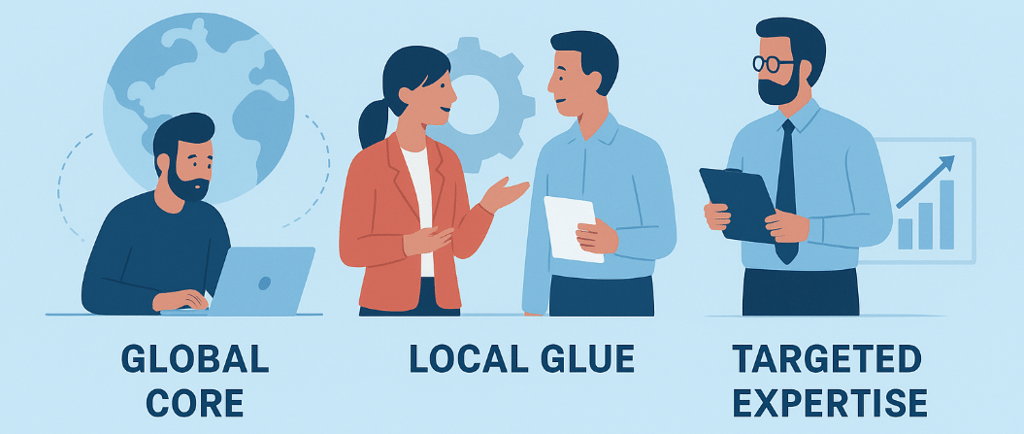
Global core → Senior engineers and architects working remotely, setting standards, mentoring others, ensuring quality.
Local glue → Team members on the ground who understand the customers, operations, and urgency.
Specialized contractors → Short-term experts filling capability gaps - security audits, infrastructure design, or product scalability.
This model kept execution tight, quality high, and knowledge retained internally.
💡 Why It Works
Research consistently shows that small, well-structured, and senior-heavy teams outperform larger but loosely coordinated groups:
High-performing tech teams share a clear purpose and culture, not just skill sets. (McKinsey, 2023)
Knowledge sharing and mentorship multiply team capacity without increasing headcount. (Harvard Business Review, 2024)
Up-skilling and rotation preserve momentum when scaling becomes necessary.
It’s the opposite of the “more is better” mindset. Small doesn’t mean weak - it means focused.
🧠 Practical Tips
Start with a strong core. Prioritize senior talent who can build frameworks, not just features.
Complement, don’t compensate. Use short-term specialists to accelerate learning, not to outsource ownership.
Upskill intentionally. Formal training or shadowing builds internal resilience.
Align team composition to company stage. Early on, generalists thrive. Later, specialists matter.
Foster psychological safety and clarity. Teams perform best when expectations and roles are explicit.
⚙️ In the GenAI Era
Today’s GenAI tools can amplify team productivity dramatically - but only when fundamentals are in place. Without clear ownership, technical excellence, and team maturity, even the best tools won’t fix poor execution.
That’s why I believe “execution discipline” - the blend of structure, autonomy, and accountability - remains the biggest differentiator between visionary ideas and shipped products.
🔚 Closing Thought
A high-efficiency team isn’t built overnight. It’s shaped through deliberate choices, trade-offs, and constant calibration. And when you get it right - even a small team can build enterprise-grade impact.
#Leadership #TeamBuilding #StartupCulture #Execution #BeyondThePilot